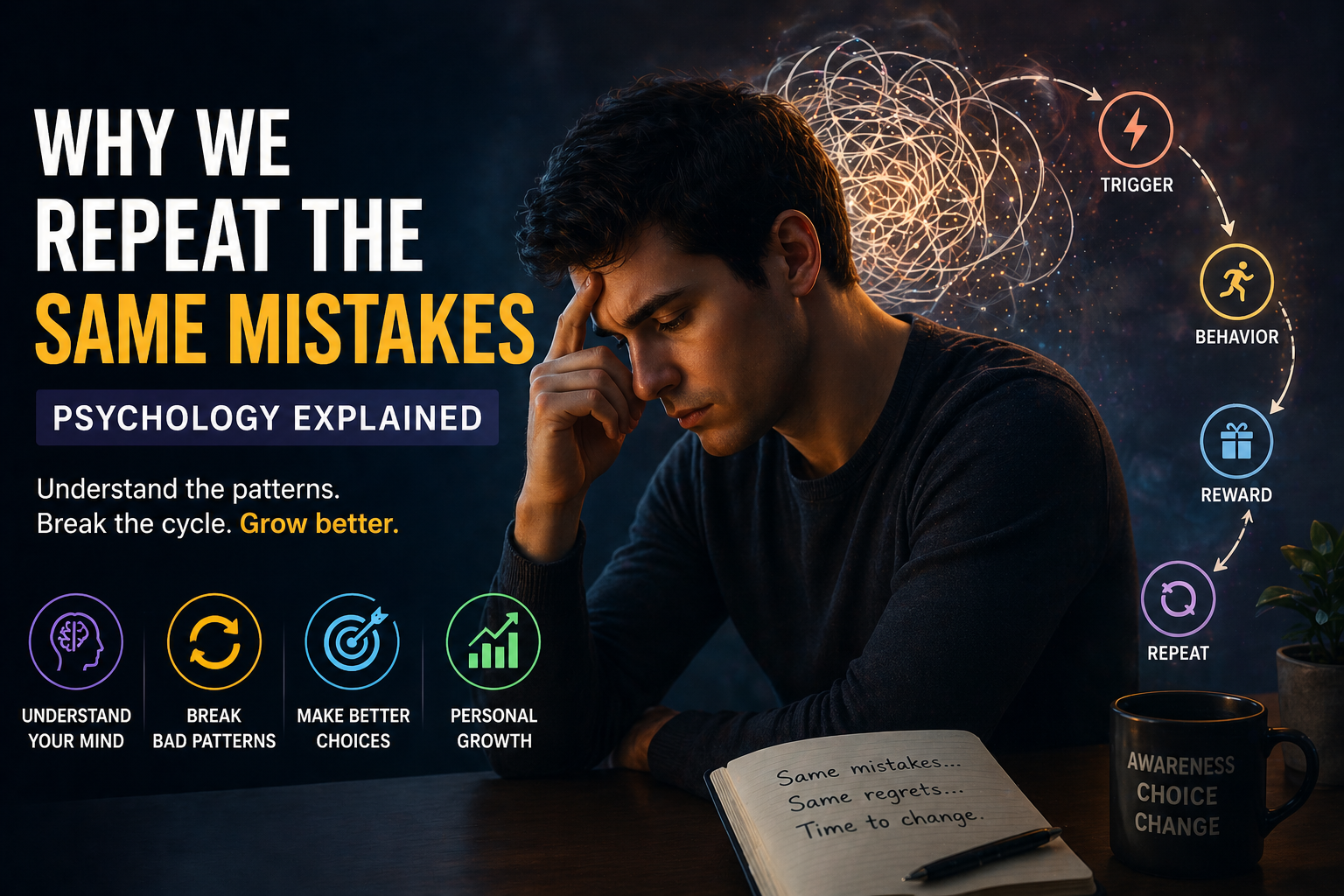
Why We Repeat the Same Mistakes (Psychology Explained)
Introduction
Have you ever found yourself making the same mistake again and again, even after promising yourself that you would change? Whether it is procrastination, poor decisions, or unhealthy habits, repeating mistakes is a common human experience.
This pattern is not simply due to a lack of willpower. In many cases, it is deeply connected to how our brain processes experiences, emotions, and habits.
In this article, we will explore the psychological reasons behind repeated mistakes and how you can begin to break these patterns.
What Does It Mean to Repeat a Mistake?

Repeating a mistake means:
- Making the same poor decision multiple times
- Falling into familiar but unhelpful habits
- Ignoring lessons from past experiences
Examples include:
- Procrastinating despite deadlines
- Returning to unhealthy routines
- Making impulsive decisions
The Psychology Behind Repeated Mistakes
1. Habit Loops
Our brain loves efficiency. Once a behavior is repeated, it forms a habit loop:
- Trigger → Action → Reward
Even if the outcome is negative, the brain remembers the reward (comfort, relief, distraction).
2. Emotional Comfort
Sometimes mistakes feel familiar, and familiarity feels safe.
People often:
- Return to known patterns
- Avoid discomfort of change
- Choose short-term comfort over long-term benefit
3. Lack of Awareness
Many mistakes are repeated because:
- We don’t fully understand why they happen
- We react automatically instead of consciously
Without awareness, patterns continue.
4. Cognitive Biases
Our brain uses shortcuts called biases, such as:
- Confirmation bias – We focus only on what supports our beliefs
- Optimism bias – We believe things will turn out better next time
- Habit bias – We prefer familiar choices
These biases can lead to repeated mistakes.
5. Emotional Triggers
Strong emotions like:
- Stress
- Anxiety
- Frustration
can push us toward automatic behaviors, even if we know they are not helpful.
Why Learning From Mistakes Is Difficult

Learning from mistakes requires:
- Reflection
- Honesty
- Patience
But many people:
- Avoid thinking about past errors
- Blame external factors
- Move on too quickly without understanding
How to Break the Cycle of Repeating Mistakes
1. Identify the Pattern
Ask yourself:
- When does this mistake usually happen?
- What triggers it?
2. Pause Before Reacting
Create a small gap between:
👉 Trigger and action
This helps you respond consciously instead of automatically.
3. Replace the Habit
Instead of trying to eliminate a habit completely:
👉 Replace it with a better one
Example:
- Replace procrastination → small 5-minute task
4. Track Your Behavior
Keep a simple record of:
- What happened
- How you felt
- What you did
Over time, patterns become clearer.
5. Practice Self-Awareness
Self-awareness means:
- Observing your thoughts
- Understanding your reactions
- Not judging yourself harshly
Role of AI in Breaking Repeated Patterns
AI can assist by:
- Helping you track habits
- Identifying patterns in behavior
- Suggesting reflection questions
However, it should be used as a support tool, not a replacement for personal judgment.
Common Mistakes People Make While Trying to Change
- Expecting instant results
- Being too hard on themselves
- Ignoring emotional triggers
- Not having a clear plan
Change takes time and consistency.
Benefits of Breaking Repeated Mistakes
- Better decision-making
- Improved confidence
- Stronger self-control
- Healthier habits
- Personal growth
Final Thoughts
Repeating mistakes is a natural part of being human, but staying stuck in the same patterns is not necessary.
By understanding the psychological reasons behind your behavior, you can begin to make more conscious choices. Small, consistent changes can lead to meaningful long-term improvement.
FAQ
Why do I keep making the same mistakes?
Because of habit loops, emotional triggers, and lack of awareness.
Can I completely stop repeating mistakes?
You can reduce them significantly with awareness and practice.
How long does it take to change habits?
It varies, but consistency over time is key.
Is repeating mistakes normal?
Yes, it is a common human behavior.
Disclaimer
This article is for educational and self-reflection purposes only. It does not provide medical, psychological, or professional advice.